


Semrush Content Marketing Toolkit Certification Exam Answers. Get all of the validated answers for the semrush content marketing toolkit certification exam. Ideal for quick and fast review or getting ready for the actual test. if you have short time then you are on right place.
Semrush Content Marketing Toolkit Certification Exam Answers
This is the Semrush montent marketing toolkit certification exam with 100% correct answers:
Q1: Which metrics AREN’T available in the Content Audit report? Choose three answers.
- Bounce Rate
- Amount of paid keywords
- Facebook shares
- Domain Score
- Backlinks
- Words Count
- Domain Age
Q2: Which metrics does the Social Media Tracker NOT track for a Facebook account?
- Reactions: ‘Like’, ‘Love’, ‘Wow’, etc.
- Posts shares
- Number of posts
- Number of followers
- Page views
Q3: What are the SEO Content Template Tool’s key recommendations based on?
- Proprietary algorithms
- Analysis of your top 10 rivals in Google
- Analysis of your top 100 rivals in Google
- Analysis of all your rivals in Google
- Analysis of SEMrush’s domain database
- Google recommendations
Q4: Look at the image below. According to the Keyword Magic Tool’s embedded feature, Keyword Analyzer, it will be easier to get higher position in Google if you write an article using the first set of keywords.
- True
- False
Q5: The On Page SEO Checker report, as shown in the image below, shows signs of keyword stuffing, based on comparison with your competitors
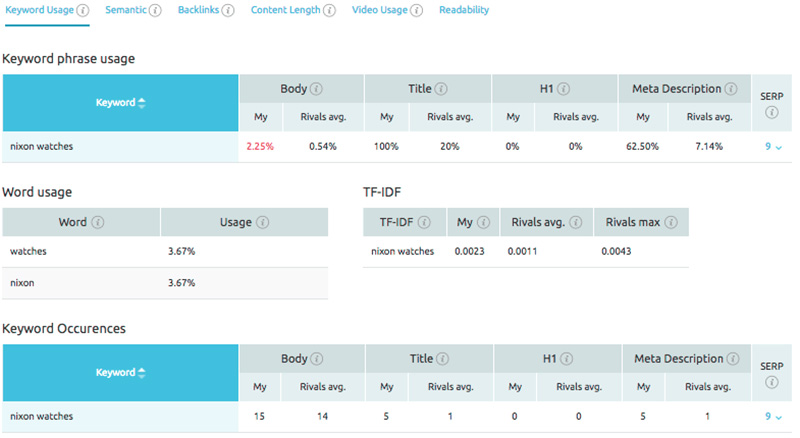
- There is not enough information to determine
- True
- False
Q6: What can be done with the help of the Marketing Calendar? Choose three answers.
- Scheduling posts on social media
- Arranging and customizing marketing campaigns and activities
- Assigning tasks within marketing activities to other users
- Analyzing you campaigns by user engagement metrics
- Sharing your calendars with other users
Q7: Which SEMrush tools should you use to find the most resonant ideas for your content based on people’s search queries and questions about a specific topic? Choose two answers.
- On Page SEO Checker
- Keyword Gap
- Organic Traffic Insights
- Topic Research
- Keyword Magic Tool
- Position Tracking
Q8: With the help of which tool can you get SEO recommendations for your future articles based on analysis of your Google top 10 organic competitors?
- Position Tracking Tool
- Advertising Positions Report
- Keyword Analytics Reports
- SEO Content Template
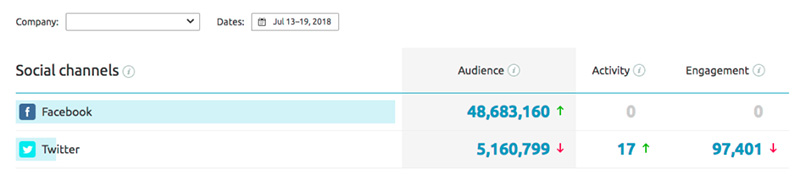
Q9: You’ve set up the Social Media Tracker to monitor social media activity. You’ve posted on Facebook five times within the last month. Why does the tool show zero activity on Facebook?
- None of your Facebook followers liked these posts
- Data in the report is not shown correctly
- All of your posts were made more than 7 days ago
- Someone reported that your posts are inappropriate for Facebook
- None of your Facebook followers reposted these posts
Q10: Which tools should a marketing specialist use to assess their online reputation? Choose two answers.
- Brand Monitoring
- Position Tracking
- Organic Positions Report
- Keyword Magic Tool
- Social Media Tracker
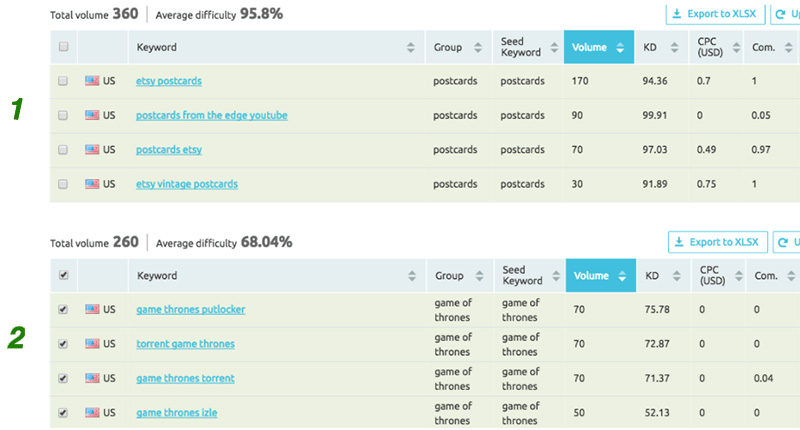
Q11: Look at the image below. According to the Keyword Manager, it will be easier to get higher position in Google if you write an article using the first set of keywords.
- True
- False
- There is not enough information to determine
Q12: You are about to start writing an article and want to get ideas for a chosen topic. You type your keyword in the Topic Research tool’s search bar and select a desired subtopic within the generated report. Which of the following insights would the tool offer you for each subtopic? Choose three answers.
- Related searches
- Backlinks
- Readability
- Headlines
- Questions
- Recommended text length
Q13: What does the TF-IDF metric from On Page SEO Checker show?
- The approximate expected monthly traffic for a keyword
- How important a word is to a specific document
- How a search engine sees a keyword
- How many times a keyword was used in a URL
- Which keywords are better perceived by people
Q14: Which two types of notifications can you set up in the Marketing Calendar?
- Trello
- Google Calendar
- In-app
Q15: Which metrics are available in the Content Audit report? Choose three answers.
- Domain score
- Domain age
- Amount of paid keywords
- Backlinks
- Words count
- Bounce Rate
Q16: While exploring the Social Media Tracker, you find out that your best-performing post on Twitter earned 120 likes, 18 retweets, and 12 replies, while your competitor’s top post got 147 likes and 53 retweets. Your audience is comprised of 9,000 users, and your competitor’s — 12,000 users. Whose post has a higher engagement rate?
- They cannot be compared
- Your post
- Your competitor’s post
- They both have equal engagement rates
Q17: Which tool helps you stay informed of changes in your article’s position in Google’s organic search for a chosen keyword?
- Keyword Magic Tool
- Organic Research
- Organic Traffic Insights
- Post Tracking
Q18: Which SEMrush tool can be integrated with your Google Analytics account in order to see how your blog posts perform?
- SEO Content Template
- Social Media Tracker
- Content Audit
- Topic Research
Q19: When working with the Topic Research tool, you can enter your domain name. What is the purpose of this?
- To highlight the subtopics you’ve already written about in order to avoid creating duplicate content
- To exclude subtopics with branded keywords that are related to your domain
- To be able to sort subtopics by topic efficiency, so that subtopics that are most relevant to your content will be shown first
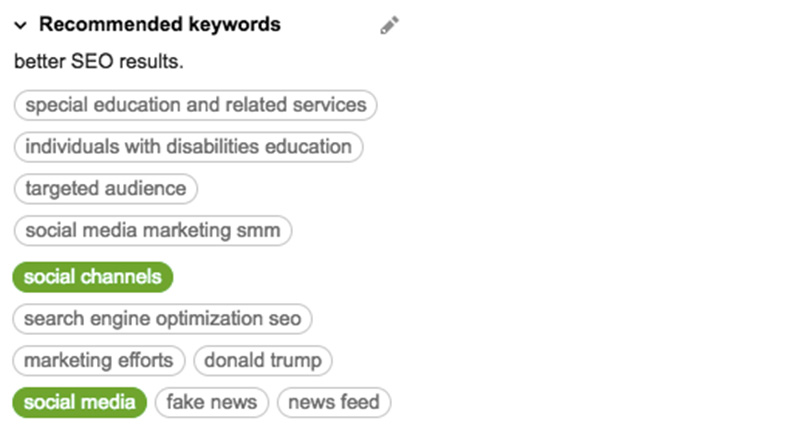
Q20: Look at the list of recommended keywords from the SEO Writing Assistant. Why are some of these keywords highlighted green?
- You’ve already used these keywords in your headings
- These keywords are the most relevant to your copy
- You’ve already used these keywords within your copy
- You’ve already used these keywords in your title
- There is not enough information to determine
Q21: You CANNOT sort sources by mentions, or filter out only blog mentions in the Brand Monitoring tool
- True
- False
Q22: The Post Tracking tool allows you to monitor the sources of your articles’ backlinks.
- False
- True
Q23: You have written a new article and it was published on several websites. Which SEMrush tool should you use to monitor your article’s exposure?
- Keyword Magic Tool
- Keyword Gap
- Post Tracking
- Domain Analytics
- Keyword Overview
Q24: To see audience, engagement and activity for your social media accounts, you would create an On Page SEO Checker campaign.
- False
- True
Also Read: Semrush Content Marketing Fundamentals Certification Exam Answers
Note: If you have the new question on this test, please comment Question and Multiple-Choice list in form below this article. We will update answers for you in the shortest time. Thank you! We truly value your contribution to the website.